A Small Midwinter Singalong, Shaped Around Listening
Plan a midwinter singalong that balances shared songs, quiet listening, and brief context, so newcomers and familiar singers can take part at ease.
A midwinter singalong feels more welcoming when nobody has to sing every minute. A few shared songs, brief context, and stretches of listening give people who know every verse—and those who would rather hum or simply be present—a comfortable place in the room.
The point is not to stage a concert or test anyone’s knowledge. Think of the evening as an exchange: someone offers a song, the group joins where it can, and quiet remains a perfectly good way to take part.
Let the room set the scale
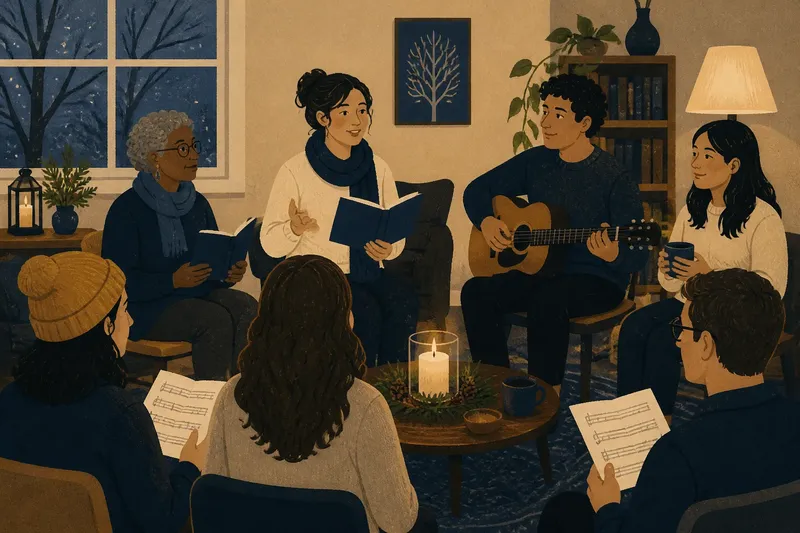
Choose a space where people can hear one another without a microphone. A living room, community room, or quiet corner of a library can work; what matters is a layout that lets faces and voices meet.
Arrange chairs in a loose circle or shallow arc, with clear sightlines to whoever introduces each song. Leave a few places open for late arrivals and for guests who prefer the edge of the group. A lamp or candle can suggest the season without making decoration the main event.
Ask one person to welcome guests and another to keep song sheets organized. The host can lead too, but a second person can notice when the group would welcome a pause, a slower pace, or a change of plan.
Keep the invitation plain: people can sing, listen, or pass on any song. Say it before the first note.
Choose songs for different kinds of familiarity
A short program might include a tune many people recognize, a song associated with a particular community or observance, and a quieter piece that does not demand a strong voice. Familiarity is not universal: a song that feels like home to one person may be new, complicated, or linked to difficult memories for someone else.
Ask a few likely guests what they would welcome, and leave room to decline suggestions. Consider each song’s language, tradition, and setting. If the group includes people with different religious backgrounds—or people who do not observe a holiday—describe the song’s place in its tradition without implying that everyone shares that belief.
Choose material the group can manage without a demanding vocal range or elaborate accompaniment. A cappella singing keeps the words clear; a keyboard or guitar can establish a starting pitch. If nobody wants to lead a melody, a recording can create a listening moment rather than an invitation to sing along.
Prepare only the printed material people need. Large, legible text helps; a song sheet can include the title, selected verses, and a brief note about the source or setting. Check permissions before reproducing copyrighted lyrics; a public-domain version or licensed song sheet may be more suitable.
Give each song a small, useful frame
Context helps listeners enter a song, but a long explanation can crowd it out. Before singing, offer a detail about where the song belongs, what its imagery suggests, or why someone chose it. Stick to what you can say with confidence.
You might mention that a song is commonly sung during a particular observance, or that its refrain turns toward welcome and shelter. Avoid presenting one interpretation as the only valid one; words can carry different associations across families, congregations, and generations.
Say whether you plan to sing every verse or just a selection, and whether the group should join the refrain. That cue lets people follow without needing to ask. If a verse includes unfamiliar language or an image that needs context, explain it briefly before beginning rather than interrupting the music.
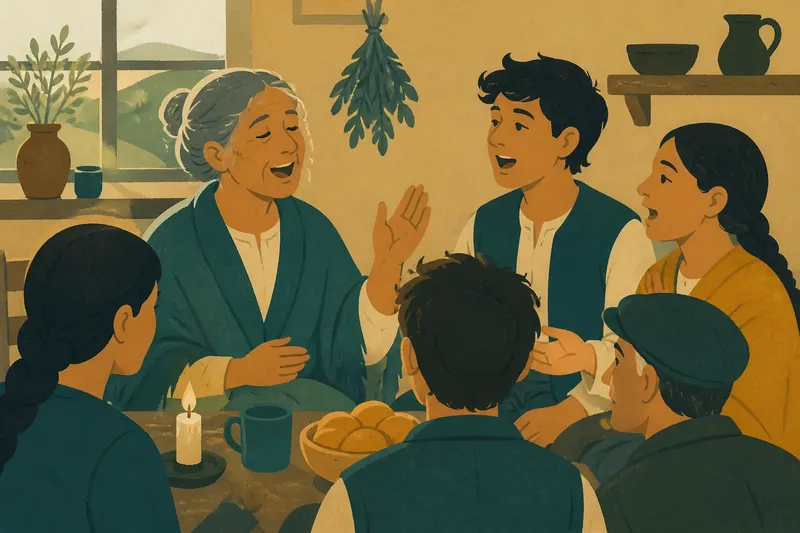
Imagine a guest arrives with a song learned from a grandparent, while the rest of the group does not know it. The host invites the guest to share what the song means to them, then sings or plays one verse while everyone listens. The group gets a shared point of attention, and the guest is not put on the spot to teach the song immediately.
Alternate singing with deliberate listening
Build a gentle rhythm rather than a string of performances. Follow a familiar group song with a short instrumental passage or recording, then invite a quieter song and leave a pause before the next introduction. The change lets voices rest and makes listening part of the gathering instead of a gap to fill.
When you use a recording, choose a version that suits the room and briefly explain why it is there. A local choir’s rendition can show how a community shapes a familiar melody; a simple solo can bring the words forward. Keep the volume comfortable and let the piece finish before commenting.
Quiet does not require a formal ritual. A few unhurried breaths, a moment to look at the winter light, or a pause after a verse can be enough. Do not ask guests to close their eyes, pray, or share personal reflections unless the group has agreed those practices fit the occasion.
Place the quietest listening moment where it feels natural, not like a surprise test of reverence. A brief introduction can tell people they may join, listen, or step out for a moment if they need to.
Shape the gathering without making it feel managed
For a small event, a simple sequence is easier to hold than a strict schedule: welcome, a familiar song, a brief listening piece, a song with context, a pause, and a closing selection. Change the order as the room responds. If people are talking or need a longer rest, there is no need to force the next item.
Keep transitions short and concrete. “We’ll listen to this verse, then join on the refrain” is more useful than a long explanation of what the evening is meant to achieve. Offer a discreet way to skip a song or take a break, especially if the material touches on grief, faith, or family memories.
Imagine a group falters on an unfamiliar verse. The leader stops at the end of the phrase, invites everyone to listen to that verse once, and then resumes with the refrain. The group has a clear return point and less pressure to keep up.
What should you prepare before guests arrive?
How many songs should a small gathering include?
Choose a compact set that leaves room for introductions, pauses, and conversation. If people want to linger over a song or skip one that does not fit the room, a shorter list is easier to adjust.
Should everyone receive printed lyrics?
Offer readable song sheets to people who want them, but do not make following the page a condition of joining. You can also name the refrain aloud or display the words if the space and permissions allow.
What if guests have different levels of familiarity?
Explain each song’s structure and make listening an acceptable choice. Refrains, repeated lines, and a starting pitch from a confident singer can help newcomers join without a rehearsal.
How can the gathering include different traditions?
Ask guests what they are comfortable sharing, describe each selection in its own context, and avoid presenting one observance as universal. If a song’s meaning is personal or disputed, let the person who brings it explain their connection without asking them to speak for an entire community.
Before people leave, ask which song or listening moment they would welcome again, without asking anyone to explain a personal response. That small invitation can shape a future midwinter singalong while keeping the current gathering’s closing gentle.